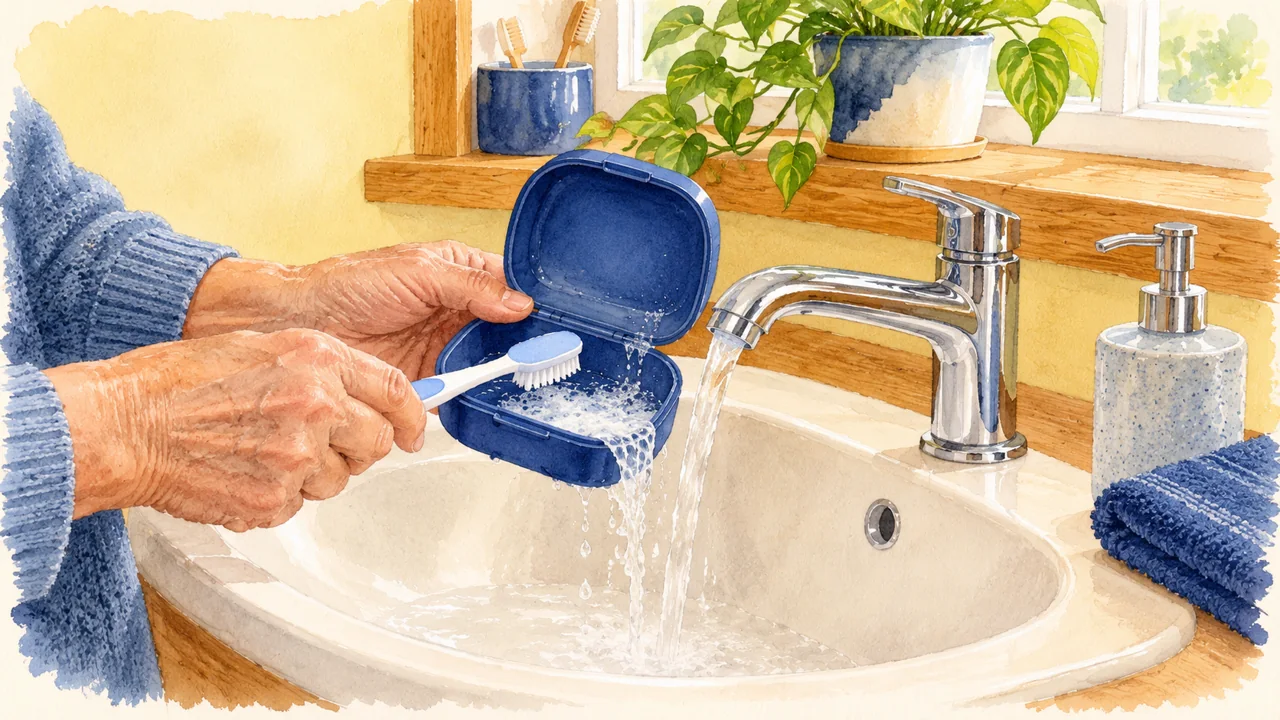
A clean denture placed in a dirty case has not reached the end of a good care routine. The storage container can collect residue, debris and stale liquid. Giving it a regular place in your cleaning routine is a small step that is easy to overlook.
Make the case easy to clean
Choose a container with a secure lid and surfaces you can reach. Follow its cleaning instructions and rinse away any residue. Letting old cleanser or storage water remain in the case indefinitely is not a substitute for washing it. Replace a damaged container if cracks or rough areas make it difficult to keep clean.
Keep the jobs separate
Use equipment suitable for cleaning the case and keep it separate from brushes used in the mouth. If someone helps you, make sure they know which case belongs to you. In shared settings, the lid and container should stay together so that appliances are not mixed up.
Refresh the contents appropriately
Follow the storage instructions for your denture. If it is stored in water, use fresh cool water as advised. If a cleanser is used, follow its concentration and contact time rather than repeatedly topping up an old solution. Rinse the denture thoroughly before putting it back in your mouth.
Choose a predictable location
Keep the case away from food preparation, pets and the edge of the sink. A consistent place helps everyone remember where the denture is. On trips or hospital visits, take the case with you rather than wrapping the appliance in a napkin. The container protects the denture only when it is actually used.
Sources and further reading
These sources support the clinical background. The practical planning suggestions are general guidance, not an individual diagnosis or treatment plan.
Information checked: 22 October 2026.
Related guides
This guide provides general information. Simon and your dental team can advise on your own circumstances.